Webhook Security Best Practices: Authentication & Data Protection (with RequestBin)
Learn how to secure webhooks with authentication, HMAC signatures, and data protection. This guide covers common risks, best practices, and how to use RequestBin to capture, inspect, and debug webhook requests for safer integrations.


Webhooks are the nervous system of modern platforms: they push real-time events (payments, signups, deploys) from one system to another. But that convenience also opens a door to attackers. If someone can spoof, snoop, or replay your webhooks, they can trigger workflows, leak data, or drain resources.
This guide explains the webhook security threat model, the best practices you should implement (authentication, integrity, replay protection, and data privacy), and shows—step by step—how to use RequestBin to capture, inspect, and debug webhook requests. You’ll get copy-pasteable code snippets for verifying signatures and a practical setup you can test today.
1) Threat model: what can go wrong?
Before hardening, define the risks you’re defending against:
- Spoofing – An attacker sends a request that looks like it came from your provider.
- Tampering – The payload is modified in transit or by a malicious intermediary.
- Replay – A valid request is captured and resent later to trigger duplicate actions.
- Eavesdropping – Sensitive data is read while in transit (or logged in plaintext).
- Endpoint abuse / DoS – Your receiver gets hammered by automated traffic.
- Secret leakage – Shared secrets end up in logs, repos, or screenshots.
Your controls should make each of these impractical.
2) Webhook security checklist (at a glance)
- Use HTTPS (TLS) everywhere. Reject plain HTTP in production.
- Authenticate the sender. Prefer HMAC signatures (shared secret) or asymmetric signatures (public key verify).
- Protect against replay. Include a timestamp and verify it’s fresh; optionally add a nonce.
- Verify on the raw body. Sign and verify the exact bytes received, not the parsed JSON.
- Rotate & scope secrets. Use one secret per provider, per environment.
- Limit blast radius. Principle of least privilege; minimize payload content.
- Harden the endpoint. Rate limit, require
Content-Type, check schema, enforce idempotency. - Secure logging. Redact secrets and PII; avoid logging full bodies unless necessary.
- Monitor & alert. Track signature failures, spikes, and unusual IP ranges.
- Use tools. Capture, inspect, and forward using RequestBin during integration and incident response.
3) Authentication & integrity with HMAC (recommended)
How it works
- The provider and your server share a secret.
- The provider computes a signature over timestamp + '.' + raw_body using HMAC-SHA256.
- The signature and timestamp are sent via headers (e.g.,
X-Webhook-Signature,X-Webhook-Timestamp). - Your server recomputes the signature and compares using a constant-time check.
- You also confirm the timestamp is recent (e.g., within 5 minutes).
Header convention (example):
X-Webhook-Timestamp: 1693560000
X-Webhook-Signature: v1=7f8c0...d2e
Versions likev1=...let you rotate algorithms later (e.g.,v2=...for Ed25519).
Sender-side example (pseudo):
import hmac, hashlib, time, json

secret = b"whsec_xxx"              # 32+ random bytes in real systems
body = json.dumps({"event": "invoice.paid", "id": "evt_123"}, separators=(",", ":")).encode()
ts = str(int(time.time()))
signed_payload = (ts + "." + body.decode()).encode()
sig = hmac.new(secret, signed_payload, hashlib.sha256).hexdigest()

headers = {
    "Content-Type": "application/json",
    "X-Webhook-Timestamp": ts,
    "X-Webhook-Signature": f"v1={sig}"
}
Note separators=(",", ":") to keep the payload stable; any whitespace differences change the signature.Receiver verification (Python / FastAPI)
from fastapi import FastAPI, Request, HTTPException
import hmac, hashlib, time

app = FastAPI()
WEBHOOK_SECRET = b"whsec_xxx"
TOLERANCE = 300  # 5 minutes

def parse_sig(header: str) -> str:
    # header looks like: "v1=abcdef123..."
    parts = [p.strip() for p in header.split(",")]
    for p in parts:
        if p.startswith("v1="):
            return p.split("=", 1)[1]
    raise ValueError("Missing v1 signature")

@app.post("/webhooks/provider")
async def handler(req: Request):
    ts = req.headers.get("X-Webhook-Timestamp")
    sig_header = req.headers.get("X-Webhook-Signature")

    if not ts or not sig_header:
        raise HTTPException(400, "Missing signature headers")

    try:
        ts_int = int(ts)
    except ValueError:
        raise HTTPException(400, "Invalid timestamp")

    # Replay protection
    now = int(time.time())
    if abs(now - ts_int) > TOLERANCE:
        raise HTTPException(400, "Stale timestamp")

    # IMPORTANT: raw bytes, not parsed JSON
    body = await req.body()

    expected = hmac.new(WEBHOOK_SECRET, f"{ts}.{body.decode()}".encode(), hashlib.sha256).hexdigest()
    provided = parse_sig(sig_header)

    # Constant-time comparison
    if not hmac.compare_digest(expected, provided):
        raise HTTPException(400, "Invalid signature")

    # TODO: store/reject duplicate (nonce/idempotency key) to block replays
    return {"status": "ok"}
Receiver verification (Node.js / Express)
import express from "express";
import crypto from "crypto";

const app = express();
// IMPORTANT: capture raw body for signature verification
app.use(express.json({ verify: (req, res, buf) => { req.rawBody = buf } }));

const WEBHOOK_SECRET = Buffer.from("whsec_xxx", "utf8");
const TOLERANCE = 300;

function safeEqual(a, b) {
  const aBuf = Buffer.from(a, "utf8");
  const bBuf = Buffer.from(b, "utf8");
  if (aBuf.length !== bBuf.length) return false;
  return crypto.timingSafeEqual(aBuf, bBuf);
}

app.post("/webhooks/provider", (req, res) => {
  const ts = req.get("X-Webhook-Timestamp");
  const sigHeader = req.get("X-Webhook-Signature");

  if (!ts || !sigHeader) return res.status(400).send("Missing signature headers");
  const tsInt = Number(ts);
  if (!Number.isInteger(tsInt)) return res.status(400).send("Invalid timestamp");

  const now = Math.floor(Date.now() / 1000);
  if (Math.abs(now - tsInt) > TOLERANCE) return res.status(400).send("Stale timestamp");

  const signedPayload = Buffer.from(`${ts}.${req.rawBody}`);
  const expected = crypto.createHmac("sha256", WEBHOOK_SECRET).update(signedPayload).digest("hex");

  const provided = sigHeader.split(",").find(p => p.trim().startsWith("v1="))?.split("=")[1];
  if (!provided || !safeEqual(expected, provided)) return res.status(400).send("Invalid signature");

  // TODO: check idempotency-key / event-id store to prevent replays
  res.json({ status: "ok" });
});

app.listen(3000, () => console.log("Listening on http://localhost:3000"));
4) Replay protection & idempotency
- Timestamps: Reject requests older than 5 minutes from
X-Webhook-Timestamp. - Nonces/unique IDs: Require a unique
X-Idempotency-Keyor event ID. Store seen IDs for at least the tolerance window and reject duplicates (409). - At-least-once delivery: Providers retry, so your handler must be idempotent—don’t charge twice; use the event ID to de-dupe.
5) Data protection & privacy
- TLS (HTTPS) mandatory. Disable HTTP in prod; redirect only if you must, and never downgrade.
- Minimize payloads. Send only fields the receiver needs (avoid PII). Consider “event summary + fetch details via API.”
- Encryption at rest. Encrypt webhook logs and persistence layers; restrict access.
- Secret management. Store secrets in a vault (not env files in repos). Rotate secrets periodically and when staff change roles.
- Redaction in logs. Never log shared secrets, tokens, or full payloads in plaintext.
- Schema validation. Validate
Content-Type, JSON schema, and event versions to prevent deserialization attacks.
6) Network hardening
- mTLS or signed JWTs (advanced). For high-assurance environments, mutually authenticate with client certificates or asymmetric signatures (Ed25519/ECDSA).
- IP allowlists (use carefully). Helpful in private environments, but IPs can change—don’t rely on allowlists instead of signatures.
- Rate limiting. 429 excessive traffic; absorb bursts from genuine retries.
- Timeouts & retries. Keep handlers fast; offload work to a queue.
7) Using RequestBin to test and debug webhook security
RequestBin is perfect for observing what your system really sends or receives—headers, body, and metadata—without guesswork.
Step-by-step: capture, inspect, and forward
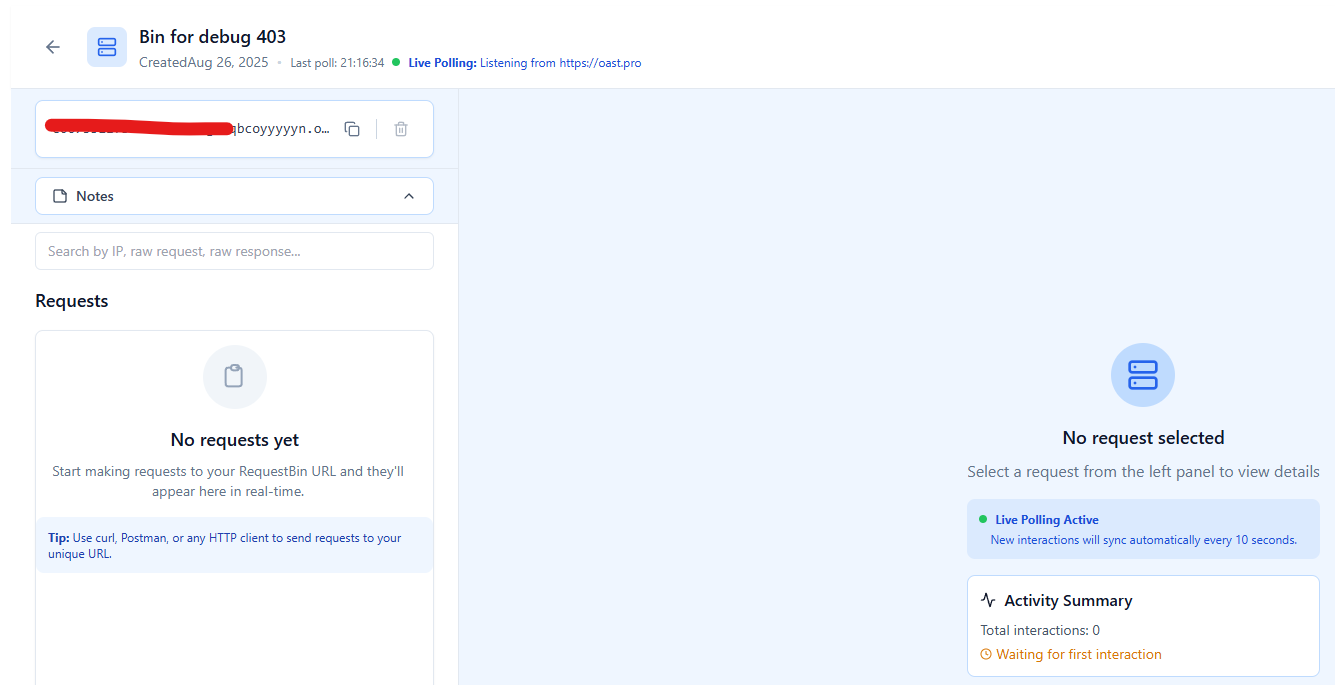
- Create a RequestBin endpoint.
You’ll get a unique URL like:
https://abc123.requestbin.net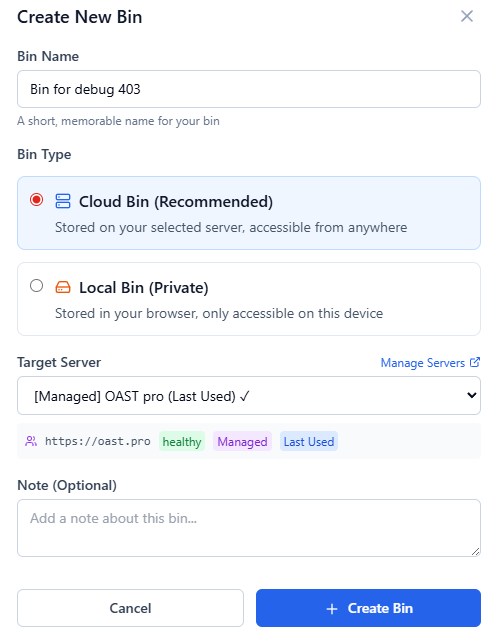
- Point your webhook provider to the endpoint.
In the provider’s settings, paste the RequestBin URL. Trigger a test event. - Inspect security headers.
In the RequestBin request view, expand the latest request and confirm:
X-Webhook-TimestampX-Webhook-Signature(v1=...)Content-Type: application/json- Any idempotency key or event ID
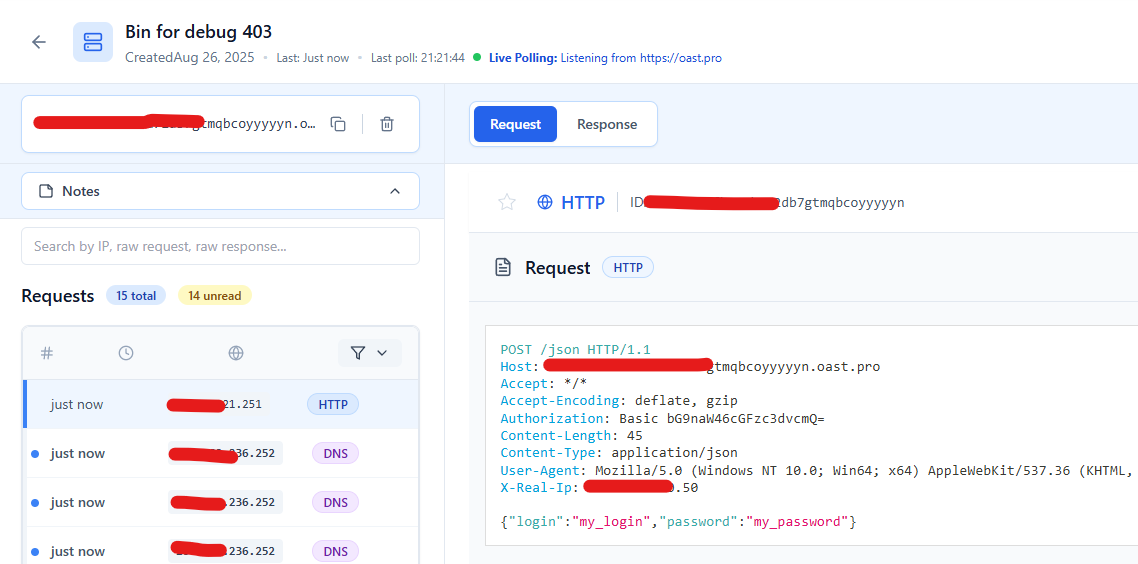
- Verify the HMAC locally (optional).
Copy the raw body and timestamp from RequestBin and drop them into your local verifier (use the Python/Node snippets above) to ensure your code reproduces the signature exactly. - Send signed requests to RequestBin from your dev machine.
Simulate the provider withcurlto validate your signing logic:
# Replace BIN with your endpoint and SECRET with your shared secret
BIN="https://abc123.requestbin.net"
SECRET="whsec_xxx"
TS=$(date +%s)
BODY='{"event":"order.created","id":"evt_123"}'
SIG=$(python3 - <<'PY'
import hmac, hashlib, os
secret = os.environ["SECRET"].encode()
ts = os.environ["TS"]
body = os.environ["BODY"]
msg = (ts + "." + body).encode()
print(hmac.new(secret, msg, hashlib.sha256).hexdigest())
PY
)

curl -X POST "$BIN"
-H "Content-Type: application/json"
-H "X-Webhook-Timestamp: $TS"
-H "X-Webhook-Signature: v1=$SIG"
-d "$BODY"- (Optional) Forwarding to your local server.
Enable forwarding tohttp://localhost:3000/webhooks/providerso RequestBin captures the request and relays it to your app. This is great for end-to-end tests and for comparing “what provider sent” vs. “what your app received.”
Screenshot idea: A small diagram “Provider → RequestBin → Local Server (Forwarded)”.
- Negative tests (highly recommended).
- Tamper the body after signing and ensure your server rejects it (
Invalid signature). - Use an old timestamp (
TS=$(($(date +%s)-600))) and confirm you get a “Stale timestamp.” - Remove the signature header to verify missing headers are handled safely.