Understanding ToolShell: The Critical SharePoint Vulnerability Under Active Exploitation
A comprehensive look at the ToolShell vulnerability chain affecting Microsoft SharePoint servers, including its impact, how it works, and steps to mitigate the risk.

Introduction
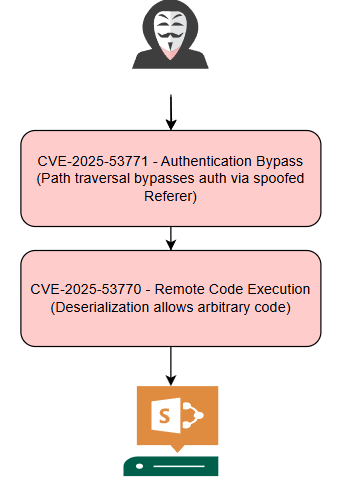
In recent weeks, the cybersecurity community has been abuzz with news of a critical vulnerability chain dubbed "ToolShell" that is actively being exploited to compromise on-premises Microsoft SharePoint servers worldwide. This exploit chain, which combines two zero-day vulnerabilities—CVE-2025-53770 and CVE-2025-53771—allows unauthenticated attackers to gain full control over vulnerable SharePoint instances, posing a significant threat to organizations that rely on this platform for document management and collaboration.
As developers and IT professionals, we often use tools like requestbin to test and debug our APIs, but we must also be aware of vulnerabilities in the broader ecosystem, such as the recent ToolShell exploit in Microsoft SharePoint. Understanding this vulnerability is crucial for anyone managing web applications or APIs, as it highlights the interconnected nature of modern digital infrastructure.
Technical Details
The ToolShell vulnerability chain exploits two distinct flaws in Microsoft SharePoint Server:
- CVE-2025-53770: This is a remote code execution (RCE) vulnerability resulting from the deserialization of untrusted data. Attackers can craft malicious serialized data that, when deserialized by the SharePoint server, allows them to execute arbitrary code remotely without authentication. This vulnerability has a CVSS score of 9.8, indicating its critical severity.
- CVE-2025-53771: This is a path traversal vulnerability that enables attackers to bypass authentication mechanisms, further facilitating the exploitation of CVE-2025-53770.
Together, these vulnerabilities allow attackers to:
- Gain unauthenticated access to SharePoint servers.
- Execute arbitrary code on the server.
- Access all SharePoint content, including file systems and internal configurations.
- Install backdoors or web shells for persistent access.
The exploit chain was first demonstrated at the Pwn2Own hacking contest in Berlin in May 2025 by Viettel Cyber Security researchers, who chained similar vulnerabilities (CVE-2025-49704 and CVE-2025-49706). Although Microsoft patched those earlier vulnerabilities in July 2025, threat actors quickly adapted, discovering new ways to bypass the patches, leading to the emergence of CVE-2025-53770 and CVE-2025-53771. These new vulnerabilities were identified as variants of the earlier flaws, exploiting similar weaknesses in the SharePoint server’s handling of HTTP requests, particularly to the "/_layouts/15/ToolPane.aspx" endpoint with a spoofed Referer header.
Impact
The ToolShell vulnerability poses a severe risk to organizations using on-premises SharePoint servers, particularly those that are internet-facing. Since the exploit requires no authentication, any vulnerable server exposed to the internet is at high risk of compromise. Once inside, attackers can:
- Steal sensitive data, such as confidential documents and intellectual property.
- Move laterally within the network to compromise other systems.
- Maintain persistence by installing backdoors or web shells, even after patches are applied, especially if cryptographic keys are stolen.
Microsoft has confirmed that SharePoint Online, part of Microsoft 365, is not affected by this vulnerability. However, for organizations running on-premises SharePoint (versions including Subscription Edition, 2019, and 2016), the stakes are high. Reports indicate that multiple threat actors, including Chinese state-sponsored groups like Linen Typhoon, Violet Typhoon, and Storm-2603, have been exploiting this vulnerability chain, targeting both private companies and government agencies, including U.S. federal agencies and a nuclear agency.
The widespread exploitation, reported as early as July 18, 2025, has affected over 85 organizations globally, with potential impacts on thousands of servers. The ease of exploitation and the high value of data stored on SharePoint servers make ToolShell a potent and dangerous attack vector.
Detection and Mitigation
To protect against the ToolShell vulnerability, organizations must take immediate action. Below are the recommended steps based on guidance from Microsoft and cybersecurity experts:
- Apply Security Updates: Microsoft released emergency patches on July 19, 2025, for all supported versions of SharePoint Server (Subscription Edition, 2019, and 2016). These updates address both CVE-2025-53770 and CVE-2025-53771. Organizations should apply these updates immediately to ensure protection. Microsoft Security Update
- Rotate ASP.NET Machine Keys: Before and after applying the updates, rotate the ASP.NET machine keys and restart the IIS web server to invalidate any stolen keys that could be used for persistent access. This step is critical to prevent attackers from maintaining access post-patching.
- Isolate Public-Facing Servers: Temporarily disconnect any public-facing SharePoint servers from the internet until they are patched and secured. End-of-life versions, such as SharePoint Server 2013, should be decommissioned entirely.
- Monitor for Suspicious Activity: Look for indicators of compromise (IoCs), such as unusual POST requests to the "/_layouts/15/ToolPane.aspx" endpoint with a spoofed Referer header set to "_layouts/SignOut.aspx". The presence of web shells or backdoors is another sign of compromise.
- Use Security Tools: Leverage tools like Microsoft Defender Vulnerability Management to identify exposed devices and track remediation efforts. Advanced hunting queries can help detect exploitation attempts. Microsoft Defender Guidance
Microsoft's advisory
| Product | Security Update link |
| Microsoft SharePoint Server Subscription Edition | Download Security Update for Microsoft SharePoint Server Subscription Edition (KB5002768) from Official Microsoft Download Center |
| Microsoft SharePoint Server 2019 | |
| Microsoft SharePoint Server 2016 |
Indicators of Compromise (IoCs)
The following table summarizes key IoCs to monitor for potential ToolShell exploitation:
Indicator | Description |
|---|---|
POST requests to /_layouts/15/ToolPane.aspx | Unusual POST requests to this endpoint, especially with spoofed Referer headers. |
Spoofed Referer: _layouts/SignOut.aspx | Attackers use this header to bypass authentication checks. |
ASPX web shells | Presence of malicious ASPX files indicating backdoor installation. |
Unauthorized file uploads | Unexpected file uploads or modifications in SharePoint directories. |
Broader Implications
The ToolShell vulnerability underscores the ongoing cat-and-mouse game between cybersecurity defenders and attackers. Even after vulnerabilities are patched, determined adversaries can find new ways to exploit systems, as seen with the rapid evolution of ToolShell from earlier patched vulnerabilities (CVE-2025-49704 and CVE-2025-49706). This incident highlights several critical lessons:
- Regular Patching: Software, especially internet-facing applications, must be updated promptly to address known vulnerabilities.
- Robust Monitoring: Implementing detection mechanisms to identify and respond to breaches quickly is essential.
- Proactive Security: Regular security audits and penetration testing can uncover vulnerabilities before they are exploited.
For organizations that rely on web applications and APIs, ensuring the security of these interfaces is paramount. While the ToolShell vulnerability specifically targets SharePoint, it serves as a reminder that web applications and APIs are prime targets for cyber attackers. Tools like requestbin can be invaluable for testing and monitoring API integrations, helping to detect anomalies and potential security issues early on. By using requestbin.net to debug webhooks and APIs, developers can ensure their integrations are functioning securely, complementing broader cybersecurity efforts.
Conclusion
The ToolShell vulnerability is a stark reminder of the ever-present threats in the cybersecurity landscape. By understanding how it works and taking proactive steps to mitigate its impact, organizations can better protect their SharePoint environments and, by extension, their broader IT infrastructure. Stay vigilant, keep your systems updated, and always be prepared for the next wave of cyber threats.
In light of vulnerabilities like ToolShell, it’s more important than ever to ensure that your web applications and APIs are secure. At requestbin.net, we provide tools to help you test and monitor your API integrations securely. Whether you’re debugging webhooks or ensuring your APIs are functioning as expected, requestbin is here to support your development and security needs. Explore how requestbin can enhance your API testing today at requestbin.net.